
Durga Puja 2025
Navratri is not just a religious festival, but also a spiritual journey. It is believed to be the most auspicious time for self-discipline, inner purification, and spiritual awakening. The nine nights are symbolic of the human soul’s journey toward enlightenment, where the practitioner attempts to overcome the ego, ignorance, and worldly attachments.
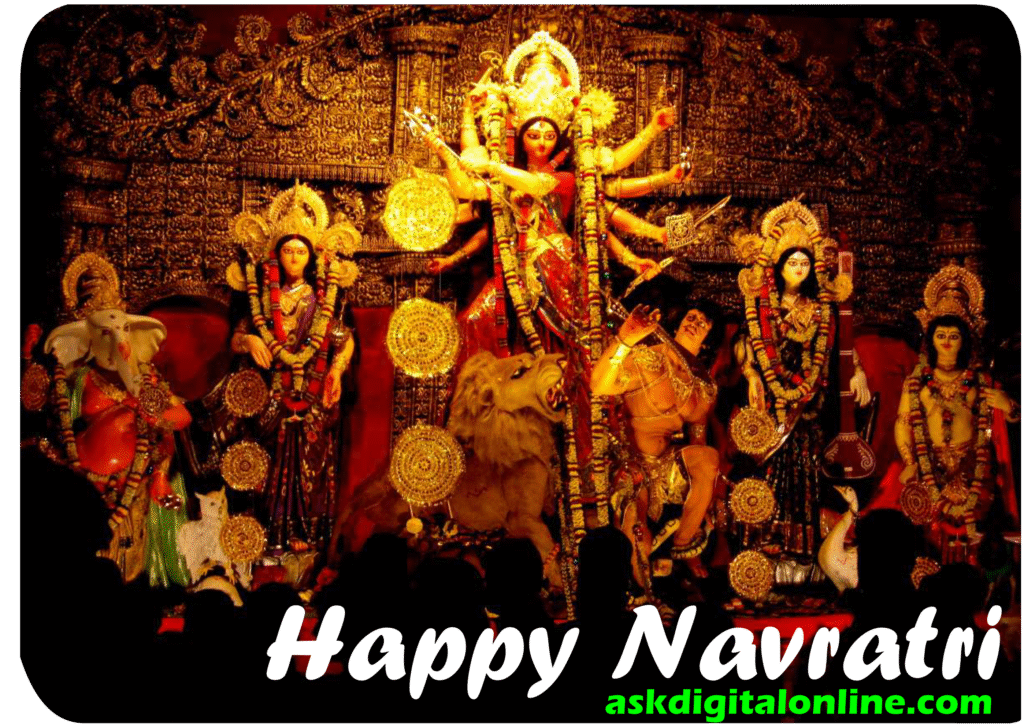
Durga Puja 2025 will be celebrated from September 29 to October 3, marking the victory of Goddess Durga over Mahishasura. This major Hindu festival symbolizes the triumph of good over evil and is especially grand in West Bengal, Assam, Odisha, and Bihar. The festival includes elaborate pandals, idol worship, cultural performances, devotional music, and Sindoor Khela. The last day, Vijaya Dashami, signifies the Goddess’s return to her heavenly abode. Families unite for prayers, feasting, and processions, celebrating Shakti Durga Puja 2025 promises spiritual joy and vibrant cultural celebration.
Navratri is one of the most vibrant and spiritually significant festivals celebrated in India. Rooted deeply in Hindu tradition and mythology, Navratri spans nine nights and ten days and is dedicated to the worship of the divine feminine energy, or Shakti, in her various forms. The word “Navratri” comes from the Sanskrit words “nava” meaning nine and “ratri” meaning night. It symbolizes the victory of good over evil, light over darkness, and wisdom over ignorance.
Navratri is celebrated with great enthusiasm and devotion across different regions of India, each with its own unique customs, rituals, and interpretations. From Gujarat’s energetic Garba and Dandiya Raas to West Bengal’s majestic Durga Puja, the festival transcends regional boundaries and brings people together in a collective spirit of reverence, joy, and cultural expression.
The Nine Forms of the Goddess
Each day of Navratri is dedicated to one of the nine forms of Durga, known as Navadurga:
1. Shailaputri Daughter of the mountains; symbolizes strength and devotion.
2. Brahmacharini The meditative form; signifies penance and spiritual practice.
3. Chandraghanta Warrior goddess with a crescent moon; embodies bravery.
4. Kushmanda Creator of the universe; represents joy and vitality.
5. Skandamata Mother of Skanda (Kartikeya); symbolizes motherly love.
6. Katyayani Fierce form born to sage Katya; the destroyer of evil.
7. Kaalratri Dark and fierce form; remover of ignorance and darkness.
8. Mahagauri Serene and beautiful; symbolizes purity and peace.
9. Siddhidatri Giver of supernatural powers and wisdom.
Cultural and Regional Significance
Though the central theme of Navratri remains the worship of the Goddess, the way it is celebrated varies across different regions of India:
1. Gujarat and Maharashtra
In Gujarat and parts of Maharashtra, Navratri is marked by Garba and Dandiya Raas traditional folk dances performed in large community gatherings. Men and women dress in colorful traditional attire and dance in circles to the rhythm of devotional songs. These dances are not just festive but also symbolic, representing the cycle of life and the universe centered around the divine.
2. West Bengal and Eastern India
In West Bengal, Navratri coincides with Durga Puja, one of the grandest festivals in the region. The last five days of Navratri are celebrated with elaborate rituals, processions, music, and dance. Huge idols of Goddess Durga slaying Mahishasura are installed in beautifully decorated pandals. The festival concludes with Sindoor Khela and Visarjan, marking the Goddess’s return to her heavenly abode.
3. North India
In North India, Navratri is associated with Ramlila – dramatic folk re-enactments of the life of Lord Rama. The tenth day, Dussehra, marks Rama’s victory over the demon king Ravana and symbolizes the triumph of good over evil. Effigies of Ravana, Meghnad, and Kumbhakarna are burnt in public grounds to celebrate this victory.
4. South India
In Tamil Nadu, Karnataka, and Andhra Pradesh, Navratri is celebrated as Golu or Bommai Kolu, where families display artistic arrangements of dolls and figurines depicting gods, goddesses, and mythological scenes. Each evening, prayers, music, and storytelling sessions are held, emphasizing culture and tradition. In Kerala, the final three days – Saraswati Puja – are dedicated to learning and knowledge.